PALESTINE | Living under occupation (1/2)

Posted on: July 6th, 2017 by admin

For 50 years, the people of Palestine have lived under Israeli occupation. In the Gaza Strip, the violence, humiliation and human rights violations they have to endure on a daily basis are compounded by a blockade which for the last 10 years has been slowly asphyxiating the territory and its population.

Milestones like these mark the suffering of an entire people. Women, men and children deprived of their freedoms, with no prospects for the future. Silent victims whose sufferings Doctors of the World – Médecins du Monde (MdM) witnesses as it cares for them.

The following photographs were taken in Palestine in May 2017. We are showing them to you in an attempt to restore to these people the dignity they deserve, and to make sure we don’t forget them.

Photos | Olivier Papegnies / Collectif Huma

Texts | Lisa Veran and Léo Goupil-Barbier

Our special thanks go to the MdM teams working in Palestine.

WALL OF SEPARATION

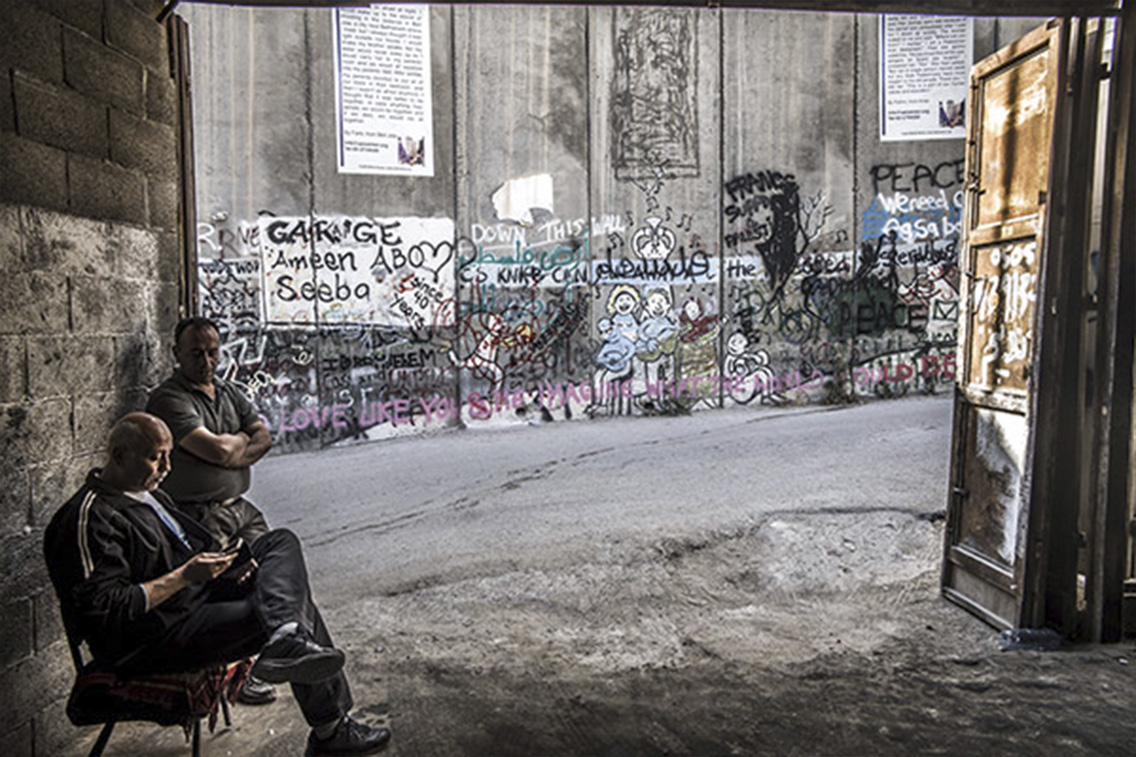
Since construction started in 2002, the wall separating the West Bank from Israel has come to symbolize all the humiliations and security oppression which the Palestinian people are forced to endure on a daily basis. This wall deprives them of one of the most fundamental liberties: the right to circulate freely. It’s also designed to isolate them, and to remind them of Israel’s supremacy over their territory. In Bethlehem, the wall provides today a canvas for artistic expression, by people such as the British street artist Banksy. But while it attracts large numbers of tourists, this wall is above all a wall of shame, dividing rather than uniting. A wall which may well project the true intentions of Israel as a prelude to the future annexation of Palestine.7
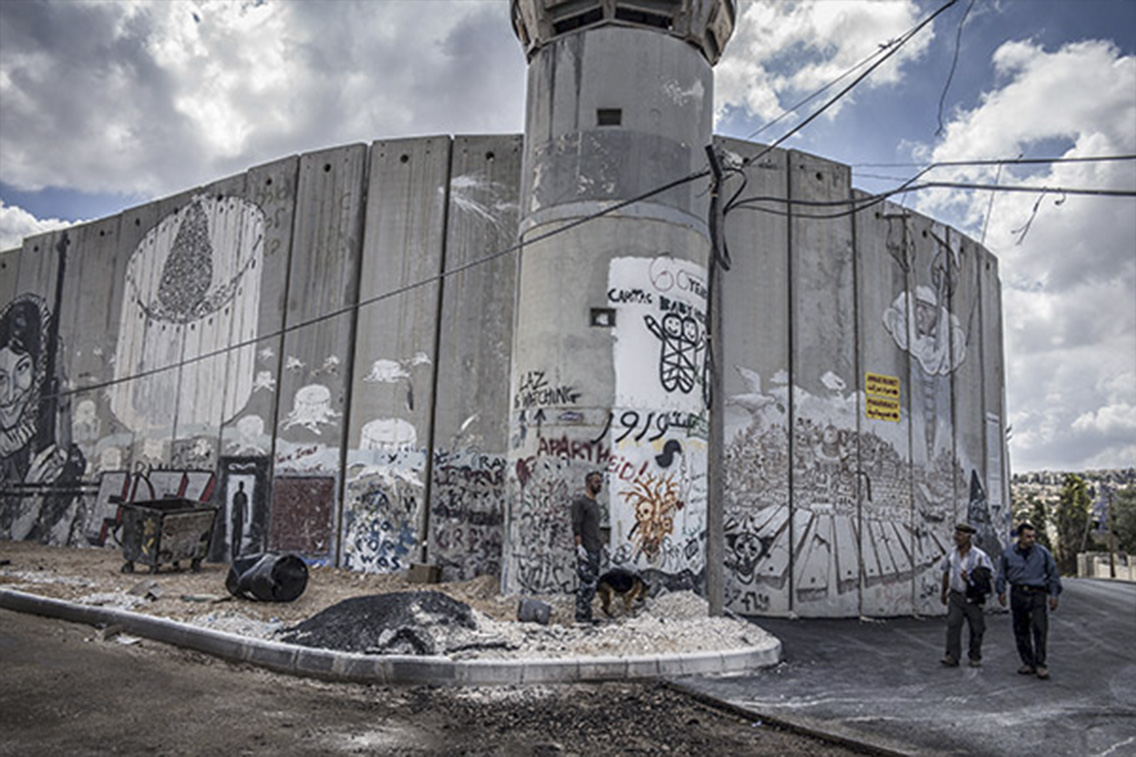
Bethlehem. The wall separating the Palestinians from Jerusalem.
6

Bethlehem. Every day, these mechanics see hundreds of tourists visiting this artistic “attraction”.

THE WEST BANK – HELPING THE VICTIMS OF SETTLER VIOLENCE

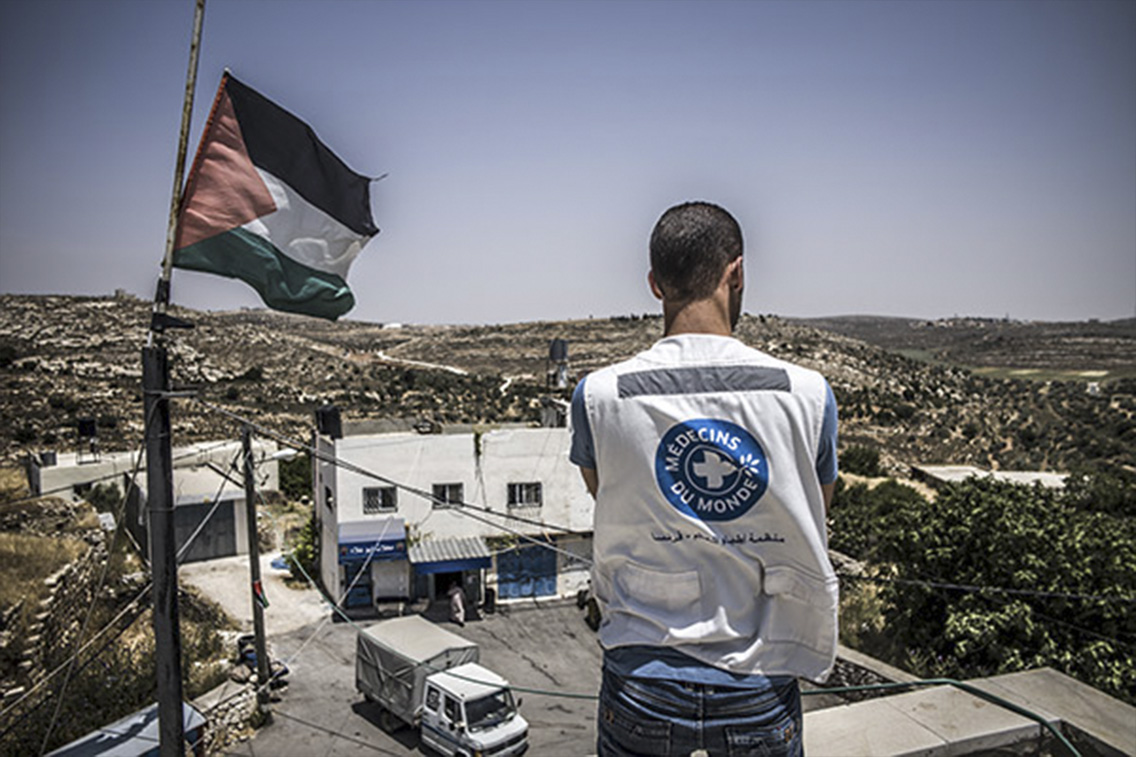
According to Ghassan Daghlass, the man in charge of the settlements issue in the Nablus region for the Palestinian Authority, the systematic encroachment of Israeli settlers is one of the biggest problems facing the Palestinians. In MdM’s intervention areas alone, an average of one critical incident occurs every week – meaning someone is killed, receives death threats or is seriously wounded. It isn’t just the violence. These settlements are always located in strategic positions which deprive the Palestinians of their resources. The lands which enables them to live and have been in their possession for thousands of years, are regularly confiscated or destroyed by settlers acting with total impunity.

Like in Urif, for example. The latest attack on this village of 400 inhabitants overlooked by the settlement of Yitzhar took place on 29 April 2017. On that day, forty masked settlers, escorted by Israeli soldiers, attacked Mounir, a father of 8 children. Mounir was beaten and left on the ground, his leg smashed in. Now that he’s disabled, he can no longer feed his family, but he can rely on the solidarity of his village, which remains active and regularly testifies to these outrages on social and associative networks.
5

At present, 750,000 people live in the 182 “official” settlements in the West Bank.
8

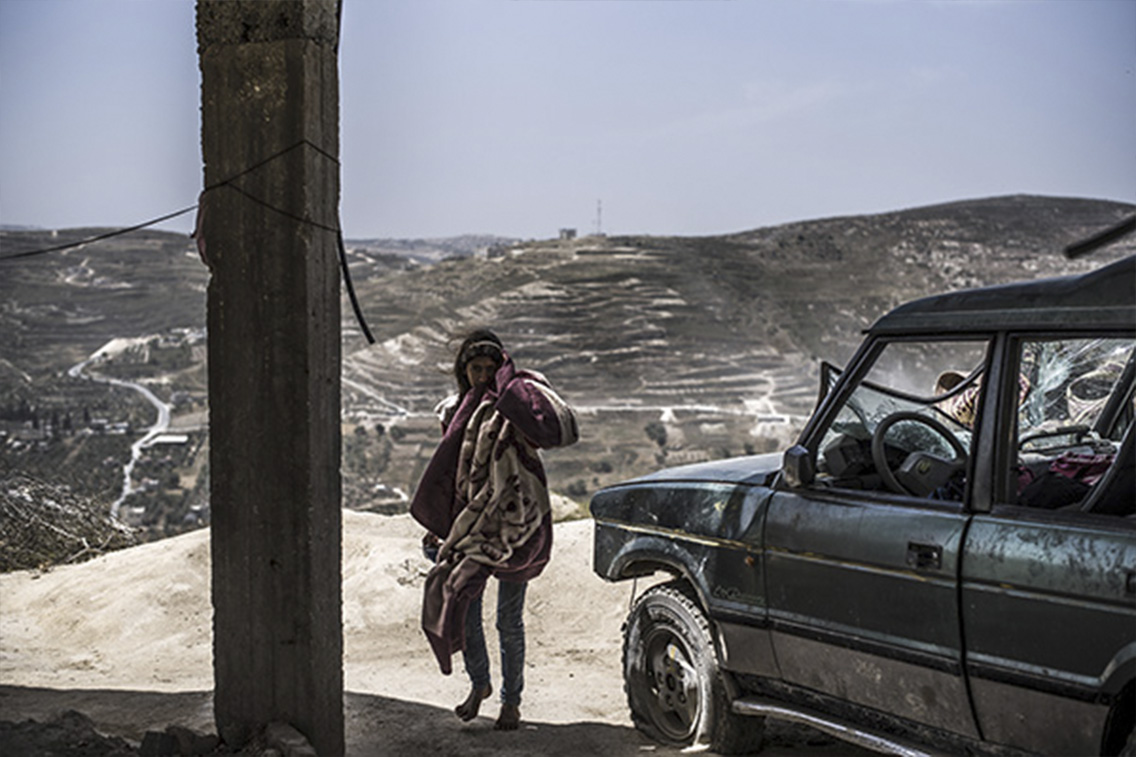
Settlers set fire to this girl’s school because they found the chants of the schoolchildren annoying.

GAZA – “ GATEWAY TO PARADISE, OR CEMETERY OF DREAMS”

Nearly 2 million people live imprisoned in the Gaza Strip, one of the most densely populated areas in the world. In addition to the demographic pressure, Gaza also has to endure Israeli occupation and – for the last 10 years – a blockade which deprives its inhabitants of basic material requirements, access to healthcare and elementary freedoms. Imports of telecommunications and construction equipment are also severely restricted.

Caught in the middle of the political tensions between Hamas and the Palestinian Authority, the people of Gaza find themselves trapped in a Kafkaesque situation, and are reduced to the most basic acts of pragmatism just to survive. Foodstuffs are expensive, and so is fuel. With just four hours of electricity a day, living a normal life is impossible. The necessary resources do exist in Gaza: only they can’t be exploited because of a blockade that’s illegal in the eyes of international law. Is the state of Israel above the law? There’s no justice in Gaza anyway.
18

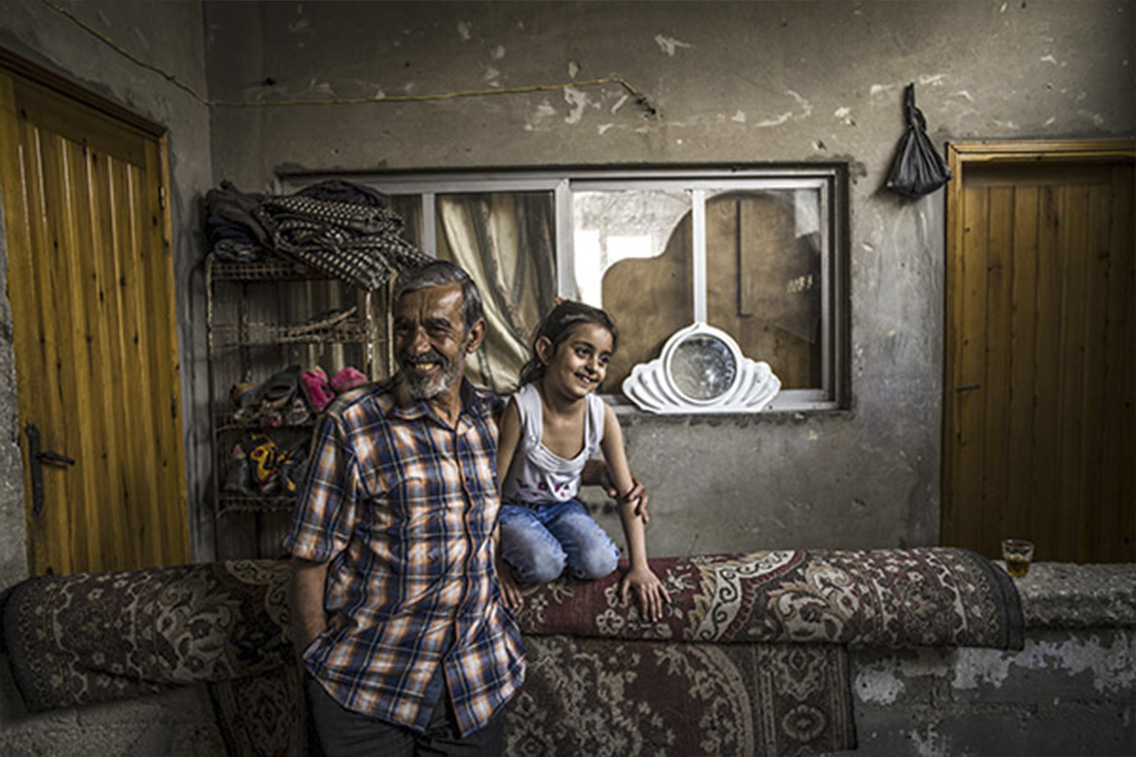
For Salim, a refugee since 1948, “everything is difficult in Gaza, for we live under occupation and today everything’s worse”.
2

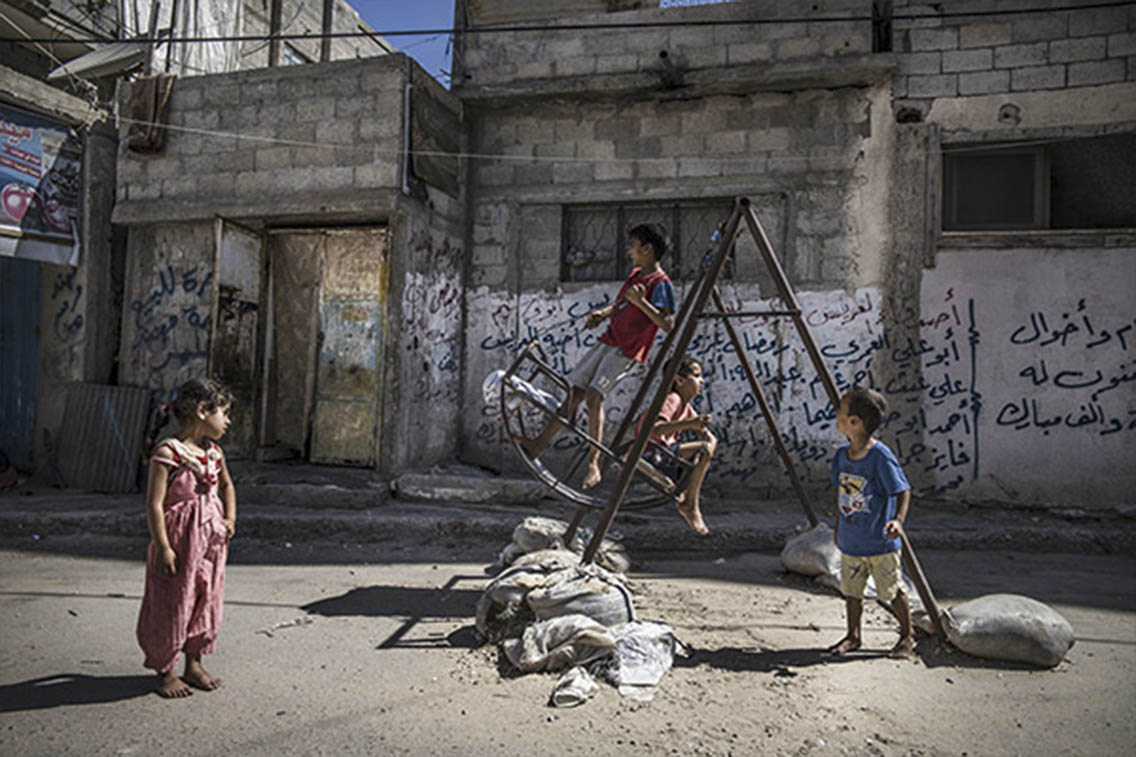
Over half of the population of Gaza is aged under 18.
 

Give access to healthcare and respect humanitarian law!

Posted on: July 6th, 2017 by admin

(Paris, July 4th 2017) To the occasion of the international meetings on the Syrian crisis in Astana (July 4th and 5th), in Hamburg (G20 on July 7th and 8th) and in Geneva (July 10th), Doctors of the World – Médecins du Monde (MdM) warns about the extent of the humanitarian crisis, the growing needs and their dramatic consequences on the health sector. Access to healthcare is a constant challenge for civilians and humanitarian staff. Protection of medical facilities and health staff must be respected.

Whereas the Syrian crisis has been persisting for 7 years, civilians are still the first targets of a conflict marked by one of the largest number of people displaced since last world war.

According to the United Nations, 13.5 million people need humanitarian aid. Among this number, 6,3 million are displaced within the Syrian territory and 4.6 million are in remote areas and their protection is seriously threatened. Fundamental rights such as access to healthcare, water and food are violated. Humanitarian actors are very often denied access to these areas and permissions to proceed to urgent medical evacuations. This aggravates the suffering and the excessive death rate of civilian populations. “Humanitarian access to these conflict areas is a constant challenge for MdM. This access must be guaranteed and respected to be able to provide healthcare, which is strongly needed by the population”, declares doctor Françoise Sivignon, president of MdM.

Since the beginning of the year, MdM and its partners have provided more than 300,000 medical consultations in Syria and 150,000 in neighboring countries, under sometimes extremely difficult conditions.

The consequences of the conflict on the health sector are dramatic. There are huge needs: almost 60% of Syrian people are affected by physical and mental trauma. By stopping the delivery of medical supplies and medicines, health is used as a real weapon of war. In this way, 477 attacks targeted medical facilities[i], making it impossible for the civilian population to have access to primary healthcare[ii]. More than a half of medical facilities are destroyed, 820 medical staff members were killed between March 2011 and late May 2017. The key point for every stakeholder must be the protection of facilities still available and the protection of professionals risking their lives to provide care.

Finally, the huge number of refugees in neighboring countries, notably Turkey, Lebanon and Jordan, where MdM takes action, undermines the health system, with dramatic consequences on the global care and treatment of patients.

In response to this barbaric situation, MdM asks the stakeholders, during the current and coming international meetings, to:

  • Make people obey international humanitarian law and duty to protect medical facilities and staff.
  • Give access to conflict areas to humanitarian aid organisations, while respecting their impartiality: crossing points must be open and protected.
  • Facilitate access to healthcare for populations affected by the conflict in Syria and neighboring countries
  • Amend the agreement on de-escalation areas to guarantee the civilians’ security in indicated places, protected from any external assault. The initiative must be multilateral and will only be effective if all actors agree and commit themselves. Stakeholders must clearly define the responsibilities, duties and restrictions to be required from the parties involved in the conflict, together with the actions to take if the agreement is not observed. 

Press contacts

Aurélie Defretin / Lisa Veran –  presse@medecinsdumonde.net

+33 (0)1 44 92 13 81 /+33 (0)6 09 17 35 59


[i][i] Physicians for Human Rights. Through evidence change is possible. Findings as of May 2017.

[ii] Despite the adoption of the resolution 2286 of the UN Security Council (May 3rd 2016), which condemns the attacks against medical facilities and staff, attacks against hospitals, doctors and patients have reached the number of 136 targeted facilities in 2016.

Targets of the World

Posted on: June 29th, 2017 by admin

International humanitarian law is being flouted on a daily basis.
In areas that are suffering, doctors and nursing staff are now being targeted.

This is despite the fact that on 3 May 2016, the United Nations Security Council adopted a resolution strongly condemning acts of violence, attacks and threats directed at ill and injured patients, nursing staff, humanitarian workers and medical facilities.

More than a year after, nothing has changed. The international community is failing to honour its commitments. More serious yet is the fact that countries which are permanent members of the Security Council are directly or indirectly participating in violating these laws by providing military support and selling arms to certain States where international humanitarian law is disregarded.

Help us remain Doctors of the World.

Sign the petition >http://targetsoftheworld.medecinsdumonde.org/

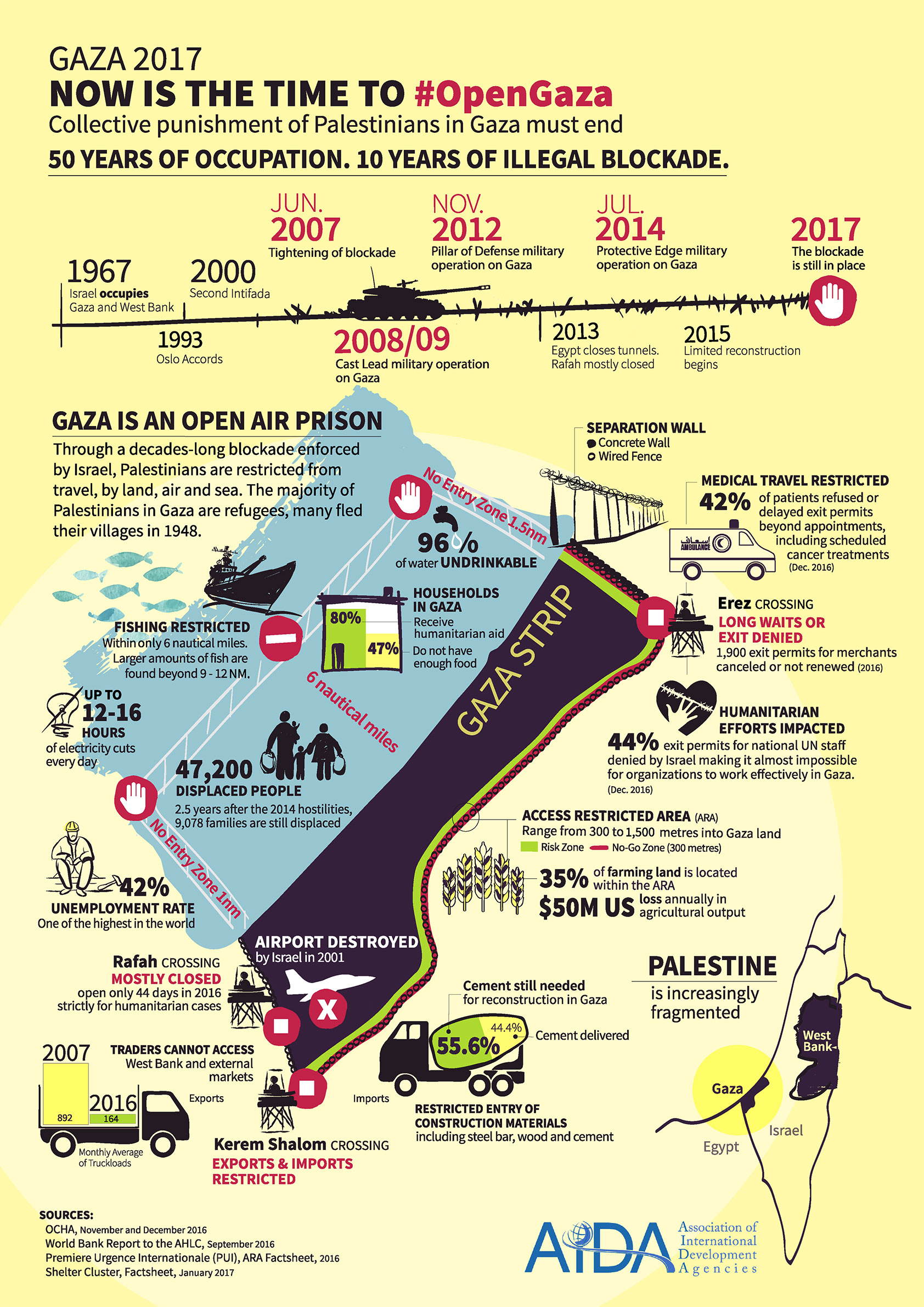
#OpenGaza

Posted on: June 19th, 2017 by admin No Comments

#OpenGaza 50 YEARS OF OCCUPATION. 10 YEARS OF ILLEGAL BLOCKADE.

© AIDA

AIDA-infographic

Mental health and psychosocial impacts of occupation-related violence in Palestine

Posted on: April 12th, 2017 by admin

Médecins du Monde France (MdM) has been working
in Palestine since 1996, and is currently focusing its
activities in North West Bank on psychosocial programs
aiming at preventing and limiting the psychosocial
impacts of occupation related violence on Palestinian
communities within Nablus, Qalqilya, Salfit and North
Jordan Valley in Tubas governorates.

Read more >MdM_MHPSS Eng

Whole-of-Syria health cluster briefing

Posted on: April 3rd, 2017 by admin

As the Syria crisis has entered its seventh year, health needs across the country have never been so acute. The lack of availability and access to health care services inside Syria has led to unnecessary suffering and many preventable deaths.
The 5th of April Brussels conference is an opportunity for states to ensure Syria population can continue accessing medical care, and to reiterate the obligation to protect healthcare and ensure there is accountability for violations of International Humanitarian Law.

Read more>Whole of Syria health sector Recommended Commitments for Brus…

Syria Regional Crisis- Health Access Monitor – March 2017

Posted on: March 29th, 2017 by admin

The Syria Regional Crisis Health Access Monitor is a Médecins du Monde quarterly publication that provides insight on the main barriers that prevent populations from accessing healthcare services inside Syria and in the neighbouring countries (Jordan, Lebanon, and Turkey).

Read here Health Access Monitor – Syria Regional Crisis_March

AIDA – Media Release : Khan El Ahmar

Posted on: March 13th, 2017 by admin

A Palestinian Bedouin community is at imminent risk of forcible transfer, a grave breach of the Fourth Geneva Convention, if the Israeli government acts on military orders to demolish an entire village in the Occupied West Bank, as early as this Sunday. A coalition of over 80 international humanitarian, development and human rights organizations is calling for urgent international intervention to prevent the demolitions and subsequent forcible transfer of 130 people, more than half of whom are children. Israeli authorities issued 42 demolition orders threatening nearly every structure (approximately 140 in total) in the community of Khan al Ahmar-Abu al Helu, with residents given until this Sunday to “self-demolish” their own homes and structures or face bulldozers destroying the village.

A number of the threatened structures were funded by the international community as part of humanitarian and development programmes, including a school serving 170 children funded by an Italian NGO, and with support of UN Agencies and Conferenza Episcopale Italiana. Demolitions could proceed anytime from Sunday 12 March unless a high court injunction is granted or diplomatic pressure succeeds in deterring implementation of the demolition orders by Israeli forces.

President of Vento di Terra NGO Barbara Archetti said: “This is devastating for families who risk being forced from their homes if the Israeli authorities go ahead with this plan. This is just one example of the insecurity that thousands of Palestinians live with every day.”

“Unless the International community makes clear that it will hold the Government of Israel accountable for such violations, we will see homes, animal shelters and even a primary school razed to the ground,” she said.

The UN has repeatedly warned that the proposed ‘relocation’ by the Government of Israel of Palestinian communities would amount to forcible transfer, a grave breach of the Fourth Geneva Convention.

Oxfam’s Country Director Chris Eijkemans said: “These alarming developments must be seen in the context of the settlement policy and broader trends toward Israeli annexation of Palestinian land.”

“Large scale demolitions of Palestinian properties are taking place against the backdrop of the recent passing of the so-called “Regularisation Law”, which allows Israeli authorities to appropriate private Palestinian property, in clear violation of international law,” Chris Eijkemans continued.
DanChurchAid’s Country Director Antony Grange said: “Khan Al Ahmar is just one of many Palestinian communities at growing risk of demolition and forcible transfer. The pressure on these communities is intense. Forcible transfer of Khan al Ahmar – in the way we fear it may unfold in the coming days – would set a deeply worrying precedent for other communities at risk.”

The Association of International Development Agencies calls on the international community, including the EU and its Member States, the US, and other international actors to:
 Publicly condemn and protest against the threatened demolition of Khan al Ahmar.
 Take all possible measures to prevent demolitions.
 Engage directly with the Government of Israel reiterating that the forcible transfer of the Khan al Ahmar community and other communities at imminent risk is a grave breach of the Geneva Conventions and that demolition of property and seizure or destruction of humanitarian assistance violates International Humanitarian Law.
 Demand from the Government of Israel to immediately cease its violations of international law and guarantee non-repetition or any further violations in the occupied Palestinian territory.
 Systematically protest against all demolitions and confiscations, and demand restitution or compensation from the Government of Israel for demolished or confiscated donor-funded assets in the occupied Palestinian territory, whether in Khan al Ahmar or elsewhere.

(END)

Photographs and footage of the community available on request. For more information please contact: Cecilie Mathiasen +972 542 851 189 info@aidajerusalem.org

Background: Khan al Ahmar is one of 46 communities in the central West Bank (combined population of approximately 7,000, of whom 70 per cent are Palestine refugees) which the UN assesses as at risk of forcible transfer due to Israeli plans to move them to one of three designated ‘relocation’ sites, which would constitute a grave breach of the Fourth Geneva Convention. These relocations would pave the way for settlement expansion and de facto annexation of occupied Palestinian land to Israel. Palestinian homes and structures are often demolished on the ill-founded justification that they are ‘illegal’ because they were built without Israeli-issued permits, despite the fact that such permits are almost impossible to acquire. 2016 saw the highest number of demolitions of Palestinian structures since UN record-keeping began, close to double the previous year – 1,094 compared to 549 demolished in 2015. 2017 has already seen 174 structures demolished to date. (Source: UNOCHA oPt)

Khan al Ahmar is located in Area C of the West Bank close to the illegal settlement of Kfar Adumim, east of Jerusalem and adjacent to the so-called “E1” corridor. The E1 plan, put on hold by Israel after protests from the international community, would effectively annex the unlawful Israeli settlements of Ma’ale Adumim, Kfar Adumim and Qedar to Israel by placing them inside an expanded separation wall. This would further divide occupied East Jerusalem from the West Bank, separating Palestinian communities from each other, effectively dividing the West Bank in two, rendering the possibility of a contiguous Palestinian state impossible.

The Association for International Development Agencies (AIDA) is a coalition consisting of more than 80 international organizations working in the occupied Palestinian territory. For more info about AIDA, see: www.aidajerusalem.org

Making the case for strategic resettlement from Lebanon

Posted on: February 1st, 2017 by admin

As part of a comprehensive approach to the refugee crisis in Lebanon, alongside
ongoing humanitarian support, increased development investment and job
creation initiatives, and calling for necessary domestic policy changes with
respect to refugee residency and access to livelihood opportunities for Syrian
refugees living in Lebanon, UN Member States must expand resettlement and
humanitarian admissions pathways for Syrian Refugees living in Lebanon so
that at least 10% are able to access asylum outside Lebanon in 2017.

Read more >LHIF_Making the Case for Strategic Resettlement

Syria: “Stand and Deliver”

Posted on: January 24th, 2017 by admin

On 4 February 2016, the international community agreed on a ‘comprehensive new approach’ to address the protracted Syria crisis at the “Supporting Syria and the Region” Conference in London. Donors, and neighbouring countries, which host the vast majority of those who have fled Syria, committed to significant financial pledges and policy changes to improve the lives of refugees and host communities.

Important steps have been taken to improve the provision of education and livelihoods in Jordan, Lebanon and Turkey. Donors have performed well in terms of aid disbursed and committed for the current financial year, and some host governments have made significant policy changes. Much more remains unaccomplished, however. Without technical assistance and further efforts to implement the wide-reaching policy framework agreed in London, there is a risk that the funding disbursed will fail to have a measurable and sustainable impact on people’s lives. Importantly, a continued lack of legal status and documentation means many refugees cannot access work and basic services, including health. Moreover, the conflict in Syria continues unabated and without a tangible increase in international support for Syria’s neighbours, including by sharing the responsibility for hosting refugees more equitably.

Read more >Stand and Deliver