Détresse émotionnelle, précarité, insécurité alimentaire: sur le terrain, voici ce que vivent les Libanais

Posted on: September 23rd, 2021 by comm
Un an après, les équipes de Médecins du Monde assistent au développement d’une vraie crise humanitaire.

Le 4 août 2020, l’explosion du port de Beyrouth a ajouté une nouvelle catastrophe dans un pays déjà en proie à une crise sociale et économique majeure. Dans les jours suivants, Médecins du Monde a adapté son offre de soins, en urgence, pour venir en aide aux personnes sinistrées et leur apporter un soutien psychologique. Un an après, les séquelles de ce drame sont toujours présentes et les habitants les plus touchés ont du mal à se reconstruire psychologiquement alors que le pays s’enfonce chaque jour un peu plus dans la crise.

Read the full article here: https://www.huffingtonpost.fr/entry/detresse-emotionnelle-precarite-insecurite-alimentaire-sur-le-terrain-voici-ce-que-vivent-les-libanais_fr_610d3530e4b075592c7b0b2a

À l’hôpital Rafic Hariri, un centre communautaire pour la santé mentale unique en son genre

Posted on: September 23rd, 2021 by comm

Article par L’Orient Le-Jour : https://www.lorientlejour.com/article/1263544/a-lhopital-rafic-hariri-un-centre-communautaire-pour-la-sante-mentale-unique-en-son-genre.html


40 days after the blast, still fighting trauma..

Posted on: September 16th, 2020 by comm

Survivor of the Beirut blast, Dalal recalls the explosion in her shattered home where she lives with her husband, near the port. Sitting before what was once a window, Dalal relives the moment of the explosion: “I was screaming. My husband’s nephew was stuck under a door. There’s no way I can get this scene out of my head!”

More than a month after the explosion, she still experiences eating and sleep disorder. “Each time I’m about to eat, I remember all of the people who have lost their hands and legs […] How can I eat while many others are not able to have a single bite?” In the past three weeks, Dalal hasn’t left her house nor has she accepted to stay or sleep alone.

Dany, Psychologist at Médecins du Monde (MdM) has been visiting Dalal and her husband to provide Mental Health and Psycho-social Support (MHPSS) sessions in the past weeks. Following these sessions and with the support of her husband, Dalal managed recently, for the first time after the explosion, to go out and even to stay alone at home. “I even went to the port, where there’s total destruction. I stood there and observed the scene”, she says.

She adds: “At the beginning I was afraid to express my fear until Dany explained to me that it’s totally fine to express how I feel […] he told me that it is normal to feel afraid after the blast. They gave me strength! I felt that someone was helping me.”

*The names have been changed to maintain confidentiality 

About MdM Response to the Beirut Blast:

As a response to Beirut Blast, Médecins du Monde has been conducting, since August 7, MHPSS interventions (home consultations and follow up, awareness sessions, Psychological First Aid (PFA) sessions, integrated mental health services in partnership with AMEL mobile clinic) in Karantina, one of the areas most affected by the explosion. In addition to that, a team of mental health specialist has been providing remote MHPSS interventions through the helpline and awareness sessions at the Community Mental Health Center (CMHC) in Rafik Hariri University Hospital (RHUH).

Researchers Develop New Guidance for the Delivery of Psychological Therapy to Children by Phone

Posted on: May 4th, 2020 by comm

Psychologists from Queen Mary University of London, American University of Beirut, Médecins du Monde and John Hopkins University, have created a free online resource for mental health services now looking to deliver psychological therapy remotely to children amid the current Covid-19 pandemic.

The guidance document draws on the researchers’ experience adapting an existing psychological treatment to phone delivery for Syrian refugee children living in Lebanon, which they are currently investigating as part of a clinical research study.

Whilst the resource is especially relevant for those working in refugee or other low resource settings, the researchers suggest this guidance can be adopted by children’s mental health services worldwide who are now transitioning to online or phone delivery due to Covid-19.

Professor Michael Pluess, Professor of Psychology at Queen Mary, said: ‘Initially we had some reservations around how successful remote delivery of an existing treatment would be, however we’ve been pleasantly surprised by how well the remote treatment programme has worked so far with Syrian refugee children in Lebanon. Whilst we’re still waiting for the complete results of our study, we’ve developed this guidance to support the many practitioners that now need to deliver psychological treatment via phone or other remote technologies.”

While some existing psychological therapies have been specifically developed for phone delivery, most of the current mental health treatments for children have been designed for face-to-face and in-person delivery and have not undergone the specific adaptation and evaluation processes for delivery over the phone or via video calls.

The resource covers topics such as developing safety protocols and managing risk over the phone, adapting therapy to maintain child engagement and tips to manage specific practical and treatment-related challenges that can arise during therapy.

Whilst the guidance proposes a number of specific solutions to support mental health services transitioning to remote delivery, the researchers outline that is important for each service to adapt these to create protocols appropriate for their specific setting, population, and type of therapy.

Dr Fiona McEwen, Postdoctoral Researcher at Queen Mary, said: “Through the delivery of our research project, we’ve already learnt a great deal in terms of what does and doesn’t work when it comes to delivering treatment remotely to children. We hope that by sharing our guiding principles we can help mental health services to deliver safe and effective therapy remotely and ensure that children worldwide continue to receive the treatment they need in these challenging circumstances.”


ENDS

Notes to Editors

  • The guidance document ‘Delivering psychological treatment to children via phone: a set of guiding principles based on recent research with Syrian refugee children’ can be found online here.
  • The t-CETA research project aims to evaluate phone-delivered psychotherapy for refugee children. It is funded by Elrha’s Research for Health in Humanitarian Crises (R2HC) Programme, which is funded by the UK Department for International Development (DFID), Wellcome, and the UK National Institute for Health Research (NIHR). More information about the project can be found here.

For further information, please contact:

Sophie McLachlan

Faculty Communications Manager (Science & Engineering)

Queen Mary University of London

sophie.mclachlan@qmul.ac.uk

Tel: 020 7882 3787

A Mental Health & Substance Use Community Center provides free psychosocial support services in Baalbeck

Posted on: February 2nd, 2020 by comm

A Mental Health & Substance Use Community Center provides free psychosocial support services in Baalbeck

In the framework of the AFD (Agence francaise de Développement) project “Improving Mental Health and Well-being of people living in Lebanon”, the Community Mental Health & Substance Use Center; run by Médecins du Monde (MdM) and Skoun, opened its doors in Baalbeck last July to serve a large community in need of mental health and substance use services.

Hala, Hassan, Joyce, Rami* and many other patients had their lives changed thanks to the treatment they’ve received at the Community Mental Health & Substance Use Center in Baalbeck. Scrolling through a list of closed cases on her laptop, Amani, mental health & psychosocial support (MHPSS) case manager at the center, recounts great stories about patients who could overcome their mental disorders within few months of treatment. In November, the center provided 151 individual consultations. Most of the cases are being referred through local NGOs operating in the region or awareness sessions conducted by Community Mobilizers trained by Médecins du Monde at the Informal tented settlements (ITS) and at the hospital by the center team.

The Community Mental Health & Substance Use Center provides free psychosocial support services ranging from case management, psychotherapy, psychiatry, parental guidance, psycho-education and group support. In addition to that, the center plays a crucial role in referring patients to the tertiary care when needed and raising awareness at the community level through awareness sessions, home visits and ITS visits.

As part of the “Improving Mental Health & Well-being of people living in Lebanon” project, Médecins du Monde and Skoun Lebanese Addictions Center aim at increasing the opportunity to enjoy the best possible mental health and well-being care, by contributing to the development of community-based centers offering inclusive services to people living in Lebanon, particularly vulnerable groups and people at risk.

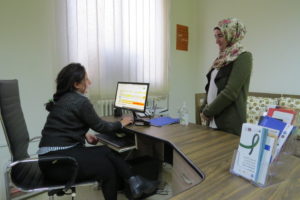
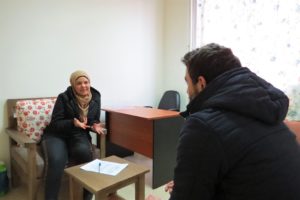
  Photo: Psychotherapy session
 Photo: Welcoming the patient at the Community Mental Health & Substance Use Center
 Photo: Community Mental Health & Substance Use Center in Baalbeck

*The names have been changed to maintain confidentiality

About MdM activities in Lebanon:

Since 2012, MdM in Lebanon, has been actively engaged in providing access to Mental Health and Psychosocial Support (MHPSS) services and reducing the impact of the Syrian crisis, on the mental and physical health of the Syrian refugees and vulnerable Lebanese. Moreover, MdM works towards strengthening the national primary healthcare system and increasing access to quality primary healthcare. MdM works in partnership with several Lebanese organizations and collaborates with universities on specific researches.

Visit our website: https://mdm-me.org/blog/countries/lebanon/

For more information about the Community Mental Health & Substance Use Center:

Email: cc.baalbek@gmail.com

Phone number: 08 370 470   ext.4000 / 70 125 868

The Syria INGO Regional Forum statement on impact of military developments on the civilian population in northeast Syria

Posted on: October 16th, 2019 by comm

The Syria INGO Regional Forum statement on impact of military developments on the civilian population in northeast Syria

The Syria INGO Regional Forum, comprising 73 INGOs responding to the Syria crisis, expressed deep concern at the rapidly deteriorating humanitarian situation since Turkey’s military operation started on the 9 October. The UN estimates that more than 200,000 people have been displaced, and is planning to support up to 400,000 people with assistance and protection in the coming period.

Over three days Hasakeh city saw an estimated 60,000 new arrivals as a result of the violence, while hostilities in the area also damaged the main water station, leaving it out of service. 400,000 people, including 82,000 people in Al Hol and Areesha camps, now rely on the provisional solution of pumping water from a nearby dam that can only meet 50% of the needs previously supplied by the main water station. This water, which is of poorer quality, is only sufficient to support Hassakeh city for approximately 10-15 days. This leaves the population exposed to outbreaks of infectious diseases, especially as acute diarrhea and typhoid were already two of the most reported illnesses in northeast Syria in August 2019.

To date, the most intense attacks have been on Tal Abyad, Ras al Ain and Quamishly. The use of air strikes and artillery in those areas, and in particular the 13 October attack on a convoy of civilians fleeing Tal Abyad, raise serious concerns that civilians have been targeted, which may amount to serious violations of international humanitarian law. Overall, the use of explosive weapons in populated areas has led to mass forced displacement and disproportionate damage to vital civilian infrastructure. With the recently renovated hospital in Ras al Ain again out of service and three health care providers in Tal Abyad rendered non-functional, people in the most affected areas have no access to lifesaving support.

SIRF is concerned that several major humanitarian facilities fall within the 30 kilometers border area in which Turkey has established a growing military presence, such as Mabrouka camp (which had 3,170 residents) and Ain Issa camp (12,901 residents). Mabrouka camp has largely been evacuated and is no longer accessible. The majority of its residents relocated to Areesha camp, but several families were unable to leave and now have no access to food, water or shelter.

While the need for humanitarian aid has dramatically increased, the operation has forced many INGOs to suspend service delivery. In the last few days, SIRF members lost access to their offices in Ain Issa, 50 kilometers from the Turkey-Syria border, after the town came under the control of Turkish-backed armed groups. The local organisations that are continuing to deliver assistance face increasingly difficult circumstances and risks to their safety.

Many Syrian humanitarian workers, including the staff of local organisations, fear for their lives and the lives of their families, as they are unable to seek safety in government-controlled areas inside Syria or in neighbouring countries. Humanitarian organisations report widespread displacement of Syrian staff, as well as concerns about increased restrictions on their freedom of movement due to risk of conscription.

With humanitarian access already compromised, any further sudden shifts of control or shifts in the presence of troops could further destabilize the area and the routes that humanitarian organisations currently rely on to reach people in need. In light of the recently announced political agreement between Kurdish authorities and the government of Syria, we call on relevant authorities to make continued access for humanitarian organisations a priority.

The people of northeast Syria have already endured years of conflict, with many being repeatedly displaced, and have suffered unimaginable physical and psychological distress. SIRF is very concerned that many of these civilians are now forced to flee south and may have to seek refuge in areas that are heavily contaminated with explosive ordnance. Areas that were retaken from Islamic State, like Raqqa, are littered with improvised explosive devices and landmines.

The Syria INGO Regional Forum is also concerned that one of the objectives of the military operation is to facilitate the return of large numbers of refugees. SIRF notes that most of the refugees in Turkey do not originate from areas Turkey is seeking to control, and reminds Turkey of its obligation to the respect the principle of non-refoulement.

SIRF believes that urgent action is needed and calls for:

  • all parties to the conflict to fulfil their obligations under international human rights law and international humanitarian law and refrain from targeting civilians and humanitarian workers, as well as to exercise restraint in order to protect water supplies, health facilities, schools and camps for displaced people;
  • all parties to the conflict to immediately cease hostilities and start urgent dialogue, supported by the international community
  • all parties to the conflict to stop the use of explosive weapons with wide area effects in populated areas in compliance with international humanitarian law;
  • all parties to the conflict and the international community to ensure that freedom of movement and humanitarian access are guaranteed;
  • all parties to investigate possible violations of international humanitarian law, especially unlawful attacks against civilians and civilian infrastructure, and to ensure those responsible are held to account;
  • the UN Security Council to renew Resolution 2165 to facilitate the provision of humanitarian aid in northeast Syria;
  • donor governments to be ready to provide the required level of flexible, emergency funding and assist humanitarian actors to respond effectively.
15 aid agencies warn of humanitarian crisis in North-East Syria

Posted on: October 14th, 2019 by comm

15 aid agencies warn of humanitarian crisis in North-East Syria: Civilians at risk as violence escalates and humanitarian work is suspended

Civilians in north-east Syria are at risk and humanitarian aid could be cut off following the launch of a new military operation in the area, leading aid agencies are warning.

Reports from humanitarian responders on the ground say civilians are already on the move and that some vital services have been interrupted, including medical facilities and water supplies. Agencies say that some of their staff have fled with their families, while others are on lockdown.

An estimated 450,000 people live within 5km of the Syria-Turkey border and are at risk if all sides do not exercise maximum restraint and prioritise the protection of civilians. The population includes more than 90,000 internally displaced people, who have already been forced to flee their homes at least once in Syria’s unrelenting war.

According to UN OCHA, there are at least 1,650,000 people in need of humanitarian assistance in north-east Syria. The life-saving humanitarian response will be threatened if instability forces aid agencies to suspend or relocate their programming and staff, as is already happening. With an ongoing major crisis in Idlib and huge needs across the country, the aid response in Syria is already stretched to breaking point.

The 15 aid agencies are urging parties to the conflict to fully respect International Humanitarian Law and ensure that they refrain from using explosive weapons in populated areas. They must ensure all measures are taken to protect civilians and facilitate safe, unhindered humanitarian access. People living in the area affected by this military action have the right to freedom of movement and must not be forcibly displaced from their homes.

Likewise, there must be no forcible returns of refugees living in Turkey to Syria. Anyone returned could face threats to their safety and security, continued internal displacement and reliance on humanitarian assistance that the international community is not in a position to provide. According to the Government of Turkey, an estimated 83 per cent of the three million Syrians in Turkey do not originate from the north-east.

The international community has an important role to play in helping to resolve this crisis. The UN Security Council, which is expected to discuss the situation today (10[th] October), must emphasize the need for restraint and reiterate importance of protecting civilians and facilitating unimpeded humanitarian operations.

The security situation in the area is already fragile, with tens of thousands of fighters and their families being held in camps and detention centres. All children must be protected and provided humanitarian assistance, and countries of origin must take immediate steps to repatriate the estimated 9,000 children from at least 40 different nationalities who are in north-east Syria.

Urgent action is needed to ensure that the humanitarian situation in north-east Syria does not worsen further, with potentially dire consequences for families and children who find themselves once again caught up in deadly violence.

Signed:

Action Against Hunger, Christian Aid, CARE International, DanChurchAid, Diakonie Katastrophenhilfe, Humanity & Inclusion, International Rescue Committee, Medecins du Monde, Mercy Corps, Norwegian Refugee Council, Oxfam, People in Need, Terre Des Hommes Italy, Un Ponte Per, World Vision

Mental Health Day 2019

Posted on: October 10th, 2019 by comm

Mental Health Day 2019

As a partner of Lebanon’s National Campaign for Mental Health in the workplace, here’s the message from Médecins du Monde (Lebanon Mission) on World Mental Health Day. Make the workplace a welcoming place for everyone!

https://www.facebook.com/mdm.mideast/videos/437933187077674/


INGO statement on attacks in Dhamar that killed and injured scores of people

Posted on: September 4th, 2019 by comm

INGO statement on attacks in Dhamar that killed and injured scores of people

International non-governmental organisations working in Yemen strongly condemn a series of attacks by the Saudi-led coalition on a former community college that has lately been used as a detention facility in Dhamar city. These attacks have reportedly led to the deaths of over 100 people, with many injured. This latest incident once again demonstrates the absolute disregard for civilian life that has been consistently shown by all parties to the conflict in Yemen.

Those being held at the facility in Dhamar were detainees and as such they are civilians who must be protected from harm under International Humanitarian Law (IHL). We urgently call for an independent, credible investigation into this incident, to find out what happened and hold the perpetrators to account.

As we approach the Human Rights Council session in Geneva next week, these attacks are a reminder of the continual and unrelenting violence being perpetrated against Yemen and its people, and of the imperative to hold to account those who continue to breach IHL.

Further, it is also unacceptable that a community college is being used as a detention centre. Schools and colleges constitute essential civilian infrastructure and should be providing educational opportunities to a generation of young Yemenis who at this stage in the almost five-year conflict are seeing their futures vanish – it is essential that these facilities are protected from being used as prisons or military facilities. It is also essential that all civilian infrastructure such as schools, hospitals, water supply systems, agriculture facilities and others remain protected from harm by all sides in the conflict.

We call on all parties to the conflict to do everything possible to prevent harm to civilians and to respect and protect civilian life and infrastructure. The only way forward for Yemen and the only way out of this war is a constructive, inclusive, sustainable political solution that puts the Yemeni people at the centre.


Inauguration ceremony of Aley Healthcare Center for the “Druze Women Association” in Lebanon

Posted on: August 20th, 2019 by comm

Inauguration ceremony of Aley Healthcare Center for the “Druze Women Association” in Lebanon

Lebanon, August 13, 2018 – The inauguration ceremony of Aley Healthcare Center for the “Druze Women Association” was held on the 8thof August 2019. The event was attended by: Ms.Camilia Halimeh Ballan/President of the Druze Women Association (DWA), Dr.Suhail Matar representative of Sheikh Akl Unitarian Druze sect Sheikh Naim Hassan, Dr.Rabih Mounzer representing Mr.Akram Chehayeb/Elected Deputy of the region and Minister of Education and Higher Education, Mr.Samir El Khoury representing Mr.Wajdi Mrad/the Chief of Aley Municipality, Dr.Ramzi el Jurdy/Member of Aley Municipality, Mr.Rami Mrad/Technical Advisor of DWA, Mr.Omar Hafez Jaber/Legal Advisor of DWA and Mr. Antoine Sagot Priez/General Coordinator of Médecins du Monde (MdM) in Lebanon, among many other invitees.

The “Druze Women Association” is one of Médecins du Monde’s Lebanese partners. MdM, with the financial support of the Government of Canada, has committed to supporting its partner in delivering quality health services for all populations in need, including Syrian refugees and vulnerable Lebanese in Aley and other regions in Lebanon.MdM’s intervention in Lebanon aims to support the national primary healthcare system with delivery of quality services.

Following the national anthem and a welcome speech, Ms. Camilia the President of the Druze Women Association and Mr.Rami Mrad the Technical Advisor of the Association, thanked all the members who participated in this successful achievement. Mr. Antoine Sagot Priez, General Coordinator of MdM Lebanon, asserted that “today is a milestone in the joint achievements of all stakeholders involved in this important task…This healthcare center is a real example of what can be done when local and international organizations ally their strengths and competencies”.

As for Dr. Ramzi el Jurdy who gave the speech on behalf of Mr.Waji Mrad, he considered that “this healthcare center was supported to become, at present and in the future, an added-value to Aley’s human and medical development”.

Dr.Rabih Mounzer, who gave the speech on behalf of his Excellency Mr.Akram Chehayeb, considered that “this initiative is very important in the current difficult economic situation, as this healthcare center delivers affordable and quality healthcare services to everyone.” The speeches were followed by the cutting of the ribbon and the unveiling of the memorial wall.

Afterwards, a visit was conducted to have an overview of the newly rehabilitated healthcare center that provides many services as follow: Sexual and reproductive health services, vaccination, curative general services, physiotherapy, dermatology, pediatric, pulmonary, dietitian, dentistry and orthodontics services, nephrology and urology services, otorhinolaryngology. The average number of consultations for basic health services supported by Médecins du Monde is 400 per month.

The ceremony was concluded by the distribution of gestures of appreciation by the “Druze Women Association” to the various stakeholders who contributed in the successful realization of this project.

Photo by: Ramy Karaouny Photography